

Elderberry Syrup
You have heard of the Foo Fighters (a popular American band)? I’m introducing you to the American Flu Fighter, the Elderberry.
The elder tree (or bush as it is also referred) is known for at least nine different species. It is also referenced as American elder, black elder or elderberry. A native plant of America, the Indians (native Americans) were known to use the entire plant system for various health needs. I do not recommend you harvest these berries in the wild unless they come from a trusted source and you are sure of plant identification. Be aware there are several bushes and leaves which are very similar in appearance. Since I do not have a tree/bush that is large enough to produce enough berries, I purchase mine from a trusted organic herbal source.
Primary therapeutic uses from the juice of the cooked berries include: anti-viral, mucous congestion, rheumatic issues, colds, bronchitis, flu, sinusitis, sore throat. Jethro Kloss has recommended the juice of the berries to ward off and limit the effects of influenza.(1) Modern herbalist primarily use the flowers or berries (leaves are only used for external needs). For the purposes of this post we will discuss only the benefits of the berries.
Dr. James Duke notes the impressive anti-viral properties he has experienced with his clients, especially in regards to the respiratory system.(2) The phytochemicals in the plant seem to ramp up the body’s immune system response. Linda White and Steven Foster commend the berries because they ‘inhibit the enzyme that flu viruses use to penetrate our cell membranes.”(3) Many of you may be interested in the 1992 study by Dr. Madeleine Mumcuoglu in Israel which proved elderberry’s great results in shortening influenza. More information regarding her study can be found online.
Elderberry syrup is an easy delivery method for ingesting the benefits from this plant. The sweet taste and small dosing make it convenient to give small children. Be sure to use the berries only when cooked as the fresh berries may cause diarrhea and in some cases vomiting. The elderberry syrup should be taken as soon as any throat, sinus or lung irritation is felt. The dosage is 1-2 Tablespoons every morning (repeat in the evening as needed). Below I have explained the process for making your own syrup. For those of you who want the benefits, but are unable to make your own, visit your locally trusted herbal shop for commercial syrups or lozenges.
1)Lust, John. The Herb Book. Bantam Books: New York, NY, 1974. (Pages 130-131).
2)Duke, James A. The Green Pharmacy Herbal Book. St. Martin’s Paperback: New York, NY, 2002. (Page 125).
3)White, Linda B. and Steven Foster. The Herbal Drugstore. Rodale Books, 2000. (Pages 182-183.)
Recipe
2 cups of dried elderberries
4 cups water
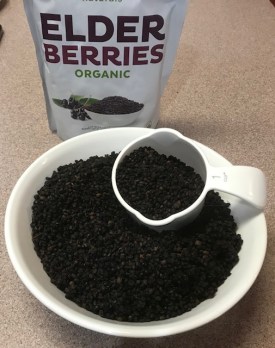
DIRECTIONS:
- Combine 2 cups of dried elderberries to 4 cups of water.
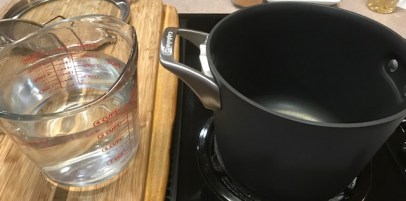
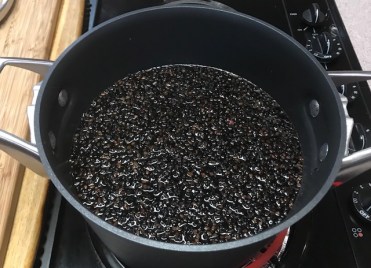
- Bring to a boil. Turn down heat and simmer for 30-40 minutes. Mash and crush berries in pot. Let sit for 10 minutes.
- Strain mixture through a cloth lined (I use a washcloth) colander. Squeeze residual juice from berries (it may stain your hands, so wear gloves unlike me!).Be careful, mixture will still be very warm.
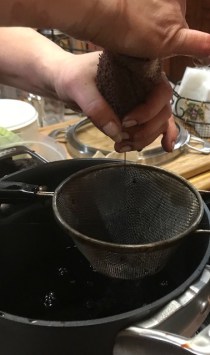
4. Discard berries. Liberally add honey or sugar to sweeten. I added the sugar while the syrup was still warm. If it has cooled too much, simply warm a small portion of the syrup, add the sugar to dissolve and combine with entire batch of syrup. Pour into sterile jar and keep in refrigerator.
 Living In Lago Land - The Herb Hugger